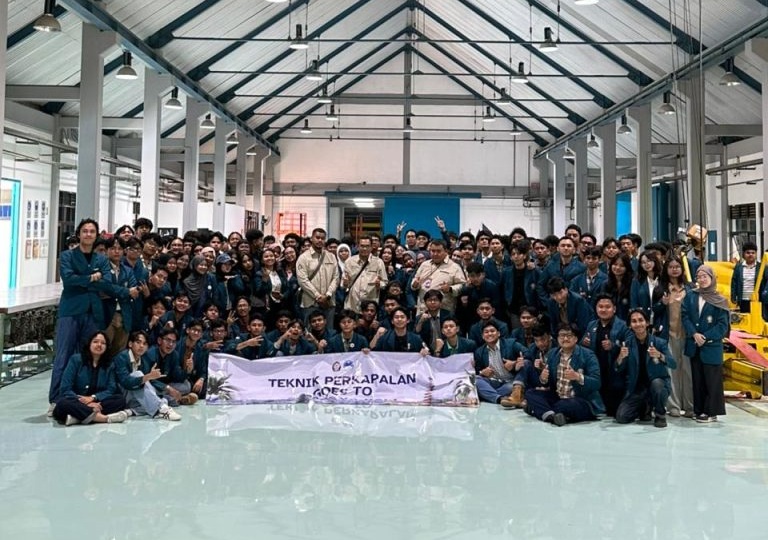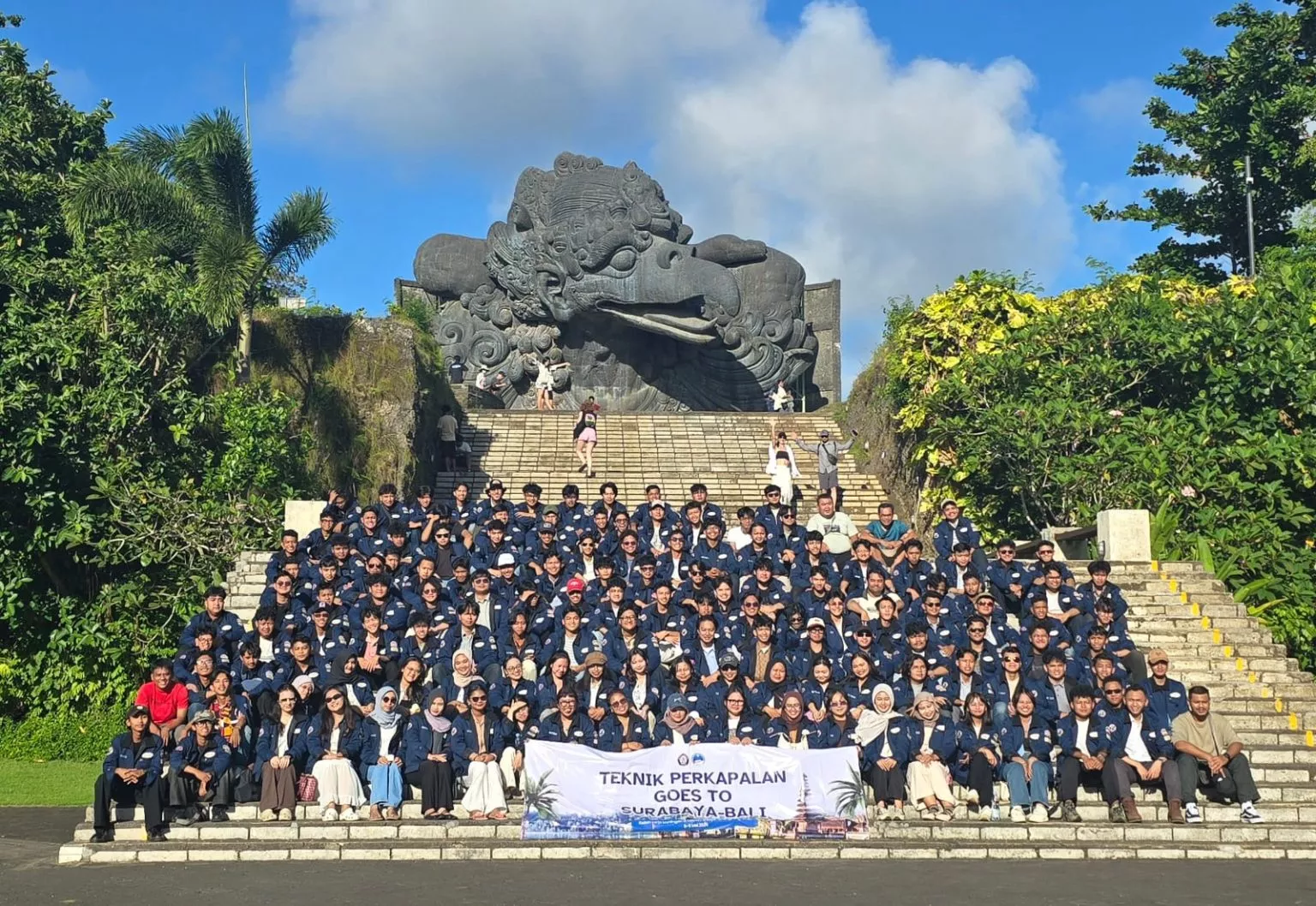
Semarang, perkapalan.ft.undip.ac.id - The Field Work Lecture (KKL) for students in the Naval Architecture and Shipbuilding Engineering Study Program, Faculty of Engineering, Diponegoro University, took place from May 5 to 9, 2026, visiting Surabaya and Bali. A total of 147 students from the class of 2023 participated in the activity, accompanied by lecturers from the Naval Architecture and Shipbuilding Engineering Department.

During the visit, the group of students and accompanying lecturers conducted a series of educational visits to two strategic locations. In Surabaya, the group visited the Hydrodynamics Laboratory of BRIN (National Research and Innovation Agency). Students had the opportunity to directly observe industrial-scale testing facilities, including towing tanks used for resistance, propulsion, and ship model maneuvering tests. BRIN researchers provided comprehensive explanations of hydrodynamics experiment methodology, the use of numerical simulation technology, and innovations in modern, efficient and sustainable ship design. This visit was highly relevant to the Ship Hydrodynamics, Ship Design, and Floating Structure Technology courses studied at the university.

The group then continued their journey to Bali and visited Benoa Port, managed by PT Pelabuhan Indonesia (PELINDO). At the port, students gained practical insights into tourism port operations and maritime logistics, including passenger terminal management for cruise ships and ferries, dock facilities, navigation systems, loading and unloading procedures, and the implementation of safety and security standards (ISPS Code). PELINDO management explained the integration of ship design with port infrastructure and efforts to preserve the maritime environment. Direct observation of ship activity at the port provided a concrete picture of the challenges and opportunities in the shipping and marine tourism industry.

The fieldwork program proceeded smoothly and provided significant benefits for all participants. Students not only gained hands-on experience outside the classroom but also connected academic theory with maritime industry practices. Interactions with BRIN researchers and PELINDO practitioners opened up insights into research and career opportunities in the national shipping sector. Supervising lecturers ensured that all activities ran according to plan and provided optimal academic guidance.